Indiana House of Representatives to Vote on Controversial Congressional Map Redrawing
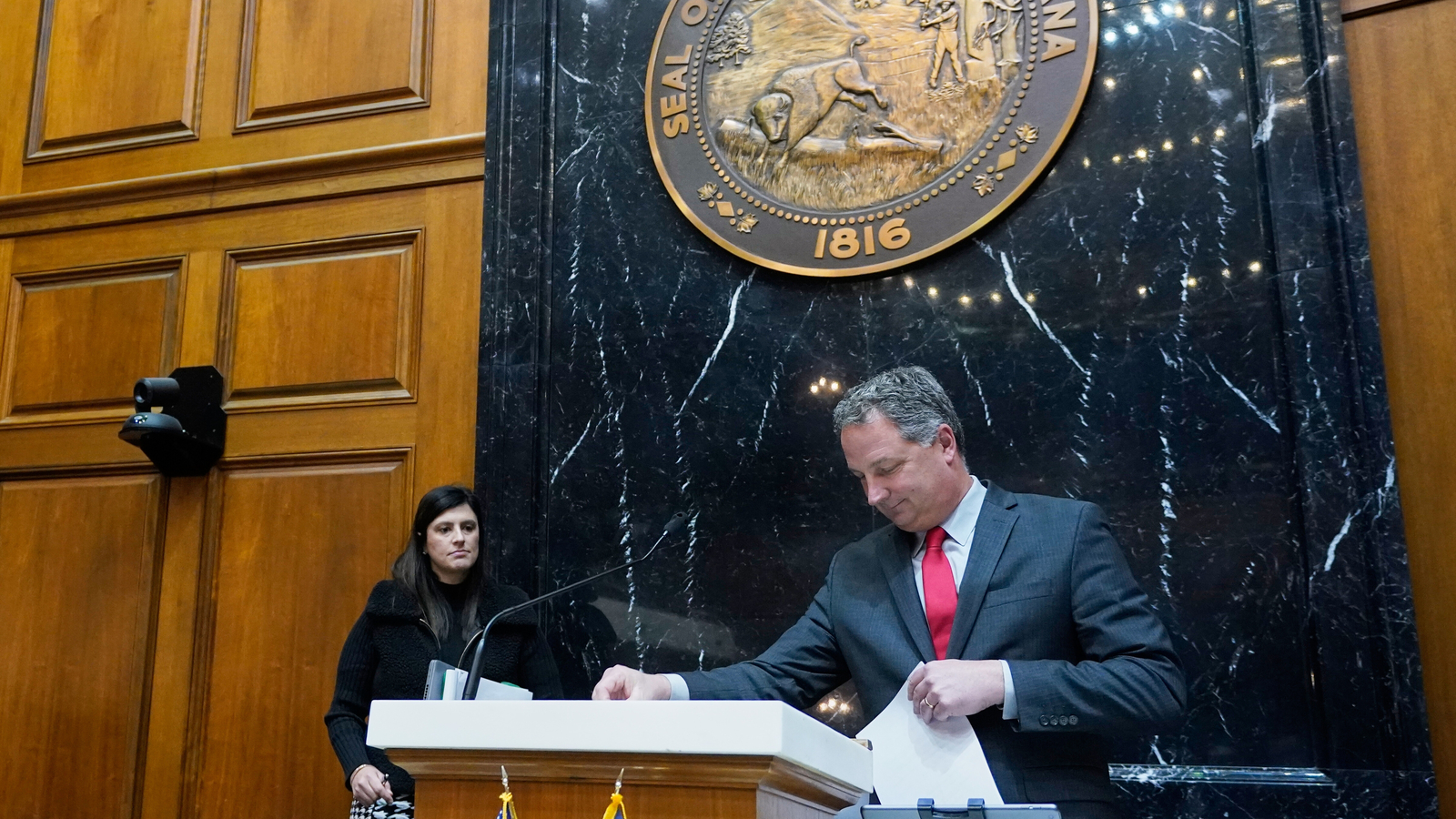
The Indiana House of Representatives is set to vote on a new congressional map that aims to eliminate the state's two Democrat-held U.S. House districts. The pressure is on GOP holdouts in the state Senate to comply with President Donald Trump's redistricting demands. Despite confidence in passing redistricting in the House, the fate of the proposal remains uncertain in the Senate, where lawmakers have resisted for months.
Republicans currently hold seven of Indiana's nine U.S. House seats and are being urged by the president and national Republicans to pursue a 9-0 GOP map ahead of the 2026 elections. Indiana Senate leadership has agreed to convene on December 8, but it is unclear if there will be enough support for a new map. A draft of the map published by House Republicans features nine congressional districts with new boundaries aimed at removing the state's two Democratic U.S. House members.
The city of Indianapolis, a Democratic stronghold, would be divided among four congressional districts under the new map, a significant change from the current setup where the city is part of the 7th District. Longtime U.S. Rep. André Carson criticized the proposed changes, attributing them to orders from Washington that do not understand the local community. The new map would also create a new 1st Congressional District by grouping Republican counties in northern Indiana with the cities of East Chicago and Gary.
Indiana lawmakers have faced pressure from the White House to redistrict, following the lead of other states like Texas, Missouri, Ohio, and North Carolina. Democrats in California and Virginia have also moved to redistrict to offset GOP gains. Some Indiana Republicans, however, have been resistant to redistricting. The Senate previously refused to attend a special session ordered by Republican Gov. Mike Braun, citing a lack of votes. President Pro Tem Rodric Bray did not confirm if the Senate still lacks the votes.
President Trump has criticized Indiana senators, particularly Bray, on social media, leading to threats and swatting incidents targeting lawmakers. Despite the challenges, the Senate plans to reconvene on December 8 to address the issue of redrawing congressional maps mid-cycle. Mid-cycle redistricting has resulted in potential gains for both Republicans and Democrats, but the outcome remains uncertain due to ongoing litigation in several states.
In conclusion, the political landscape in Indiana is tense as lawmakers navigate the redistricting process under pressure from the White House and internal party dynamics. The fate of the proposed congressional map hangs in the balance as the House prepares to vote and the Senate faces challenges in garnering support for the new boundaries. The outcome of the redistricting efforts will have significant implications for the state's representation in Congress and the balance of power between Republicans and Democrats.