Unraveling Mars' Magnetic Mysteries: The ESCAPADE Mission and Its Implications for Earth's Climate
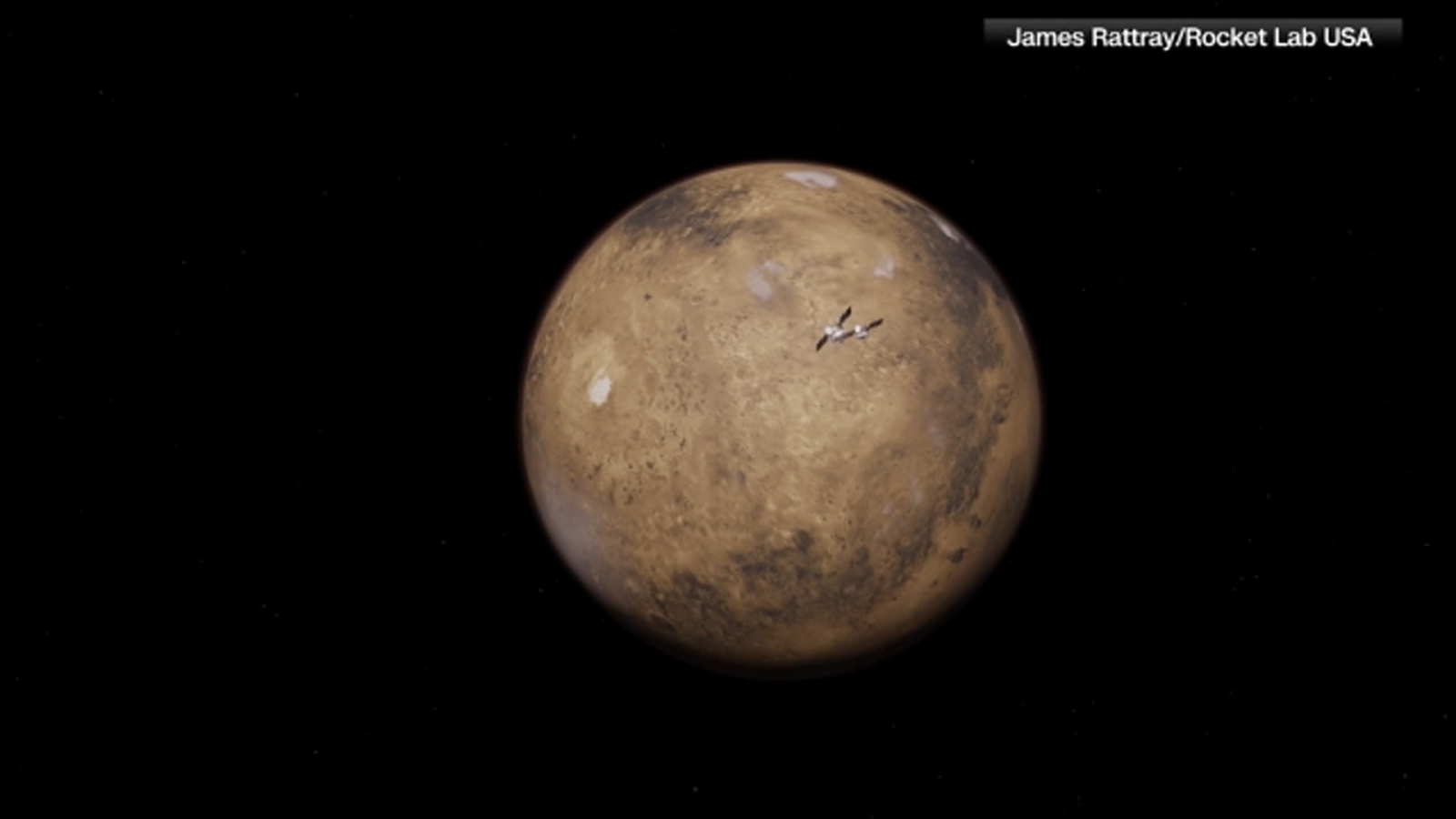
Mars, once a planet with a thick atmosphere and flowing water, is now a cold, dry desert-like world. Scientists are intrigued by the transformation of Mars and its potential implications for Earth. Casey Dreier from the Planetary Society highlights the similarities between Mars and Earth's history, emphasizing the importance of understanding Mars' fate to appreciate Earth's unique conditions.
One key factor contributing to Mars' current state is the absence of a protective magnetic field like Earth's, leaving it vulnerable to the sun's harmful particles. To delve deeper into this phenomenon, NASA and the University of California, Berkeley are launching the ESCAPADE mission, consisting of twin orbiters that will study Mars' magnetosphere and upper atmosphere in 3D.
The ESCAPADE mission is set to depart from Kennedy Space Center aboard a Blue Origin New Glenn rocket, taking a novel route to Mars via a Lagrange point before looping back towards Earth. This innovative trajectory could revolutionize future Mars missions by enabling flexible launch schedules, crucial for potential human expeditions to the Red Planet.
The twin probes, named Gold and Blue, will provide real-time insights into Mars' response to space weather and magnetic field variations. These mini-fridge-sized spacecraft aim to unravel the mysteries of Mars' atmospheric loss and enhance our understanding of solar threats, which could benefit Earth's climate and atmosphere protection efforts.
By comprehending the solar interactions that stripped Mars of its atmosphere, scientists hope to safeguard future astronauts from space weather hazards during potential Mars missions. The ESCAPADE mission builds upon MAVEN's findings and offers cost-effective scientific exploration, demonstrating the feasibility of conducting impactful space missions on a budget.
Casey Dreier underscores the significance of planetary exploration in shaping our understanding of Earth's climate vulnerabilities and the delicate balance of factors that sustain life on our planet. Recognizing the fragility of Earth's habitability underscores the importance of studying planetary evolution and the protective mechanisms that shield our home in the vast cosmos.
In conclusion, the ESCAPADE mission's quest to unlock Mars' magnetic mysteries holds promise for advancing space weather forecasting, protecting future astronauts, and deepening our appreciation for Earth's unique conditions. By unraveling the secrets of Mars' atmospheric loss, scientists aim to enhance our understanding of planetary evolution and the delicate interplay of factors that sustain life on Earth.