Controversy on the National Mall: The Trump-Epstein Friendship Statue and Its Removal
A statue of President Trump and Jeffrey Epstein, titled Best Friends Forever, was briefly displayed on D.C.'s National Mall before being removed. The installation featured the two men smiling and holding hands, with a plaque celebrating their friendship. The statue was taken down by U.S. Park Police, sparking controversy over its removal.
The Secret Handshake group claimed responsibility for the statue, accusing the Trump administration of illegally removing it. Trump has distanced himself from Epstein, citing a falling out before Epstein's legal troubles. The friendship between Trump and Epstein has been a subject of scrutiny, with calls for the release of Epstein files.
The statue's removal raised questions about freedom of speech and political censorship. The Secret Handshake group expressed disappointment over the statue's abrupt removal without prior notice. Trump's association with Epstein has been a contentious issue, with conflicting accounts of their relationship over the years.
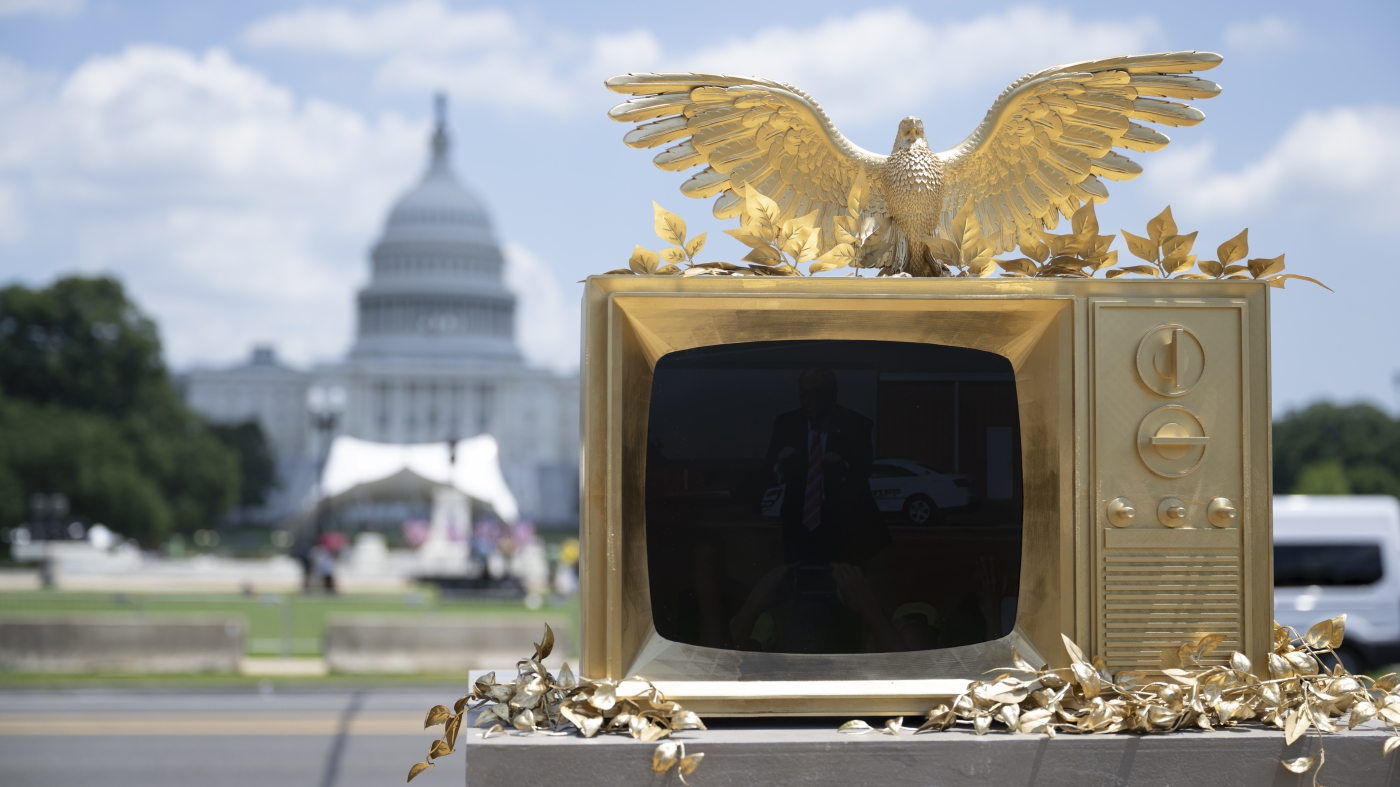
The friendship statue is one of several anti-Trump sculptures that have appeared in D.C. in recent years. The Secret Handshake group has been behind most of these installations, including ones depicting Nancy Pelosi's desk and Trump's response to the Charlottesville rally. These statues aim to provoke discussion and critique of Trump's presidency.
In conclusion, the statue of Trump and Epstein on the National Mall sparked controversy and debate over their relationship. The Secret Handshake group's provocative sculptures challenge political norms and highlight issues surrounding freedom of expression. The removal of the statue reflects ongoing tensions surrounding Trump's association with Epstein and the broader political landscape.