Power Play: The U.S.-China Competition for Indonesia's Clean Energy Future
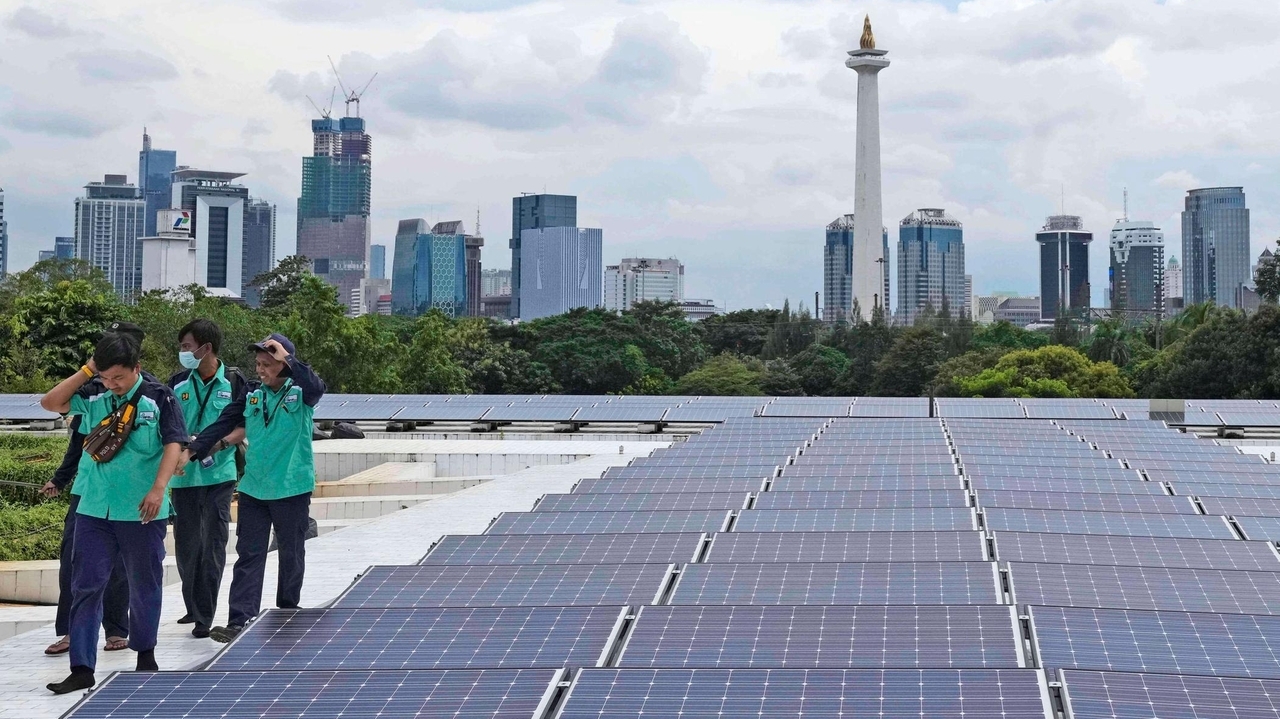
In Jakarta, Indonesia, the race to transition away from coal and towards clean energy has become a competition between the United States and China. This shift is crucial not only for Indonesia's climate future but also for determining which superpower will shape the next generation of energy in the developing world.
Indonesia, like many developing countries, is at a crossroads when it comes to its energy future. Chinese companies have made significant investments in Indonesia's clean energy sector, totaling over $54 billion in agreements with the state utility PLN. President Prabowo Subianto's visit to Beijing in 2024 further solidified this partnership with an additional $10 billion in commitments. These investments far surpass the $20 billion Just Energy Transition Partnership (JETP) signed in 2022 to help Indonesia move away from coal.
The JETP, which aimed to support Indonesia's transition away from coal, faced challenges even before the U.S. formally withdrew from the program. With only a fraction of the necessary funds disbursed, Indonesia estimates needing over $97 billion for the transition. The U.S. has advocated for liquefied natural gas (LNG) as an alternative to coal, emphasizing "energy dominance" to reduce reliance on competitors like China.
The differing approaches of the U.S. and China in Indonesia's energy transition reflect two distinct visions of the future. While the U.S. withdrawal from the JETP did not derail the program, it did impact political leadership and raised questions about the commitment to transitioning away from coal.
The JETP, which was designed to cover only a portion of the funds needed for Indonesia's transition, aimed to foster foreign investment in the country's renewable energy sector. China, on the other hand, has been actively investing in Indonesia's clean energy supply chain, including solar, critical mineral mining, and electric vehicles.
Chinese projects in Indonesia, such as battery manufacturing and electric vehicle production, have been rapidly deployed, aligning with Indonesia's shorter political cycles. However, these investments have raised concerns about environmental impacts, particularly in nickel mining, which is crucial for EV batteries and relies on coal-fired power plants.
While China's investments offer quick deployment of clean energy infrastructure, they also come with environmental costs. Indonesia's reliance on coal for nickel mining and the potential increase in LNG imports from the U.S. could further entrench the country's dependence on fossil fuels.
Indonesia risks falling behind in the global clean energy transition if it continues to prioritize coal and fossil fuel investments over renewable energy. The country's future economic opportunities, such as attracting data centers seeking renewable energy sources, could be at stake if it fails to embrace cleaner energy alternatives.
As Indonesia grapples with its energy transition, it must confront its deep ties to coal and consider the long-term implications of its energy choices. Embracing renewable energy sources like solar and wind power is essential for Indonesia to stay competitive in the evolving global energy landscape.