End of an Era: White House Removes 40-Year Peace Vigil Amid Controversy
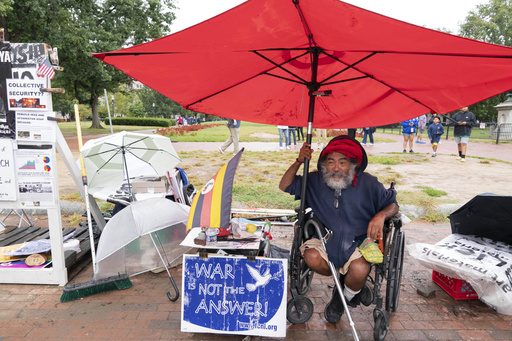
Law enforcement officials removed a peace vigil outside the White House that had been in place for over 40 years following President Donald Trump's order to clear homeless encampments in Washington, D.C. The volunteer who maintained the vigil, Philipos Melaku-Bello, stated that the removal was unjustified as the vigil was not a shelter but a form of expression protected by the First Amendment. The White House cited the vigil as a hazard and confirmed its removal.
The removal of the peace vigil is part of the Trump administration's efforts to take control of policing in the city, which began last month. Melaku-Bello is considering legal action, viewing the removal as a violation of civil rights. The vigil, initiated in 1981 by activist William Thomas, aimed to advocate for nuclear disarmament and peace. Despite Thomas's passing in 2009, protesters like Melaku-Bello continued to maintain the vigil to prevent its dismantling.
During an event at the White House, a correspondent informed Trump about the vigil, describing it as an "eyesore" and potentially a national security risk. Trump, unaware of the situation, ordered the immediate removal of the tent. Melaku-Bello refuted claims of rats and security risks associated with the vigil, emphasizing that no weapons were found during the removal process.
The removal of the peace vigil outside the White House marks the end of a longstanding anti-war protest that has been a symbol of activism for decades. Despite the vigil's removal, the spirit of peaceful protest and advocacy for nuclear disarmament continues to resonate. The vigil's legacy as a symbol of resistance and expression of free speech remains significant in the history of U.S. activism.