Debating Genocide: Assessing Israel's Actions in Gaza
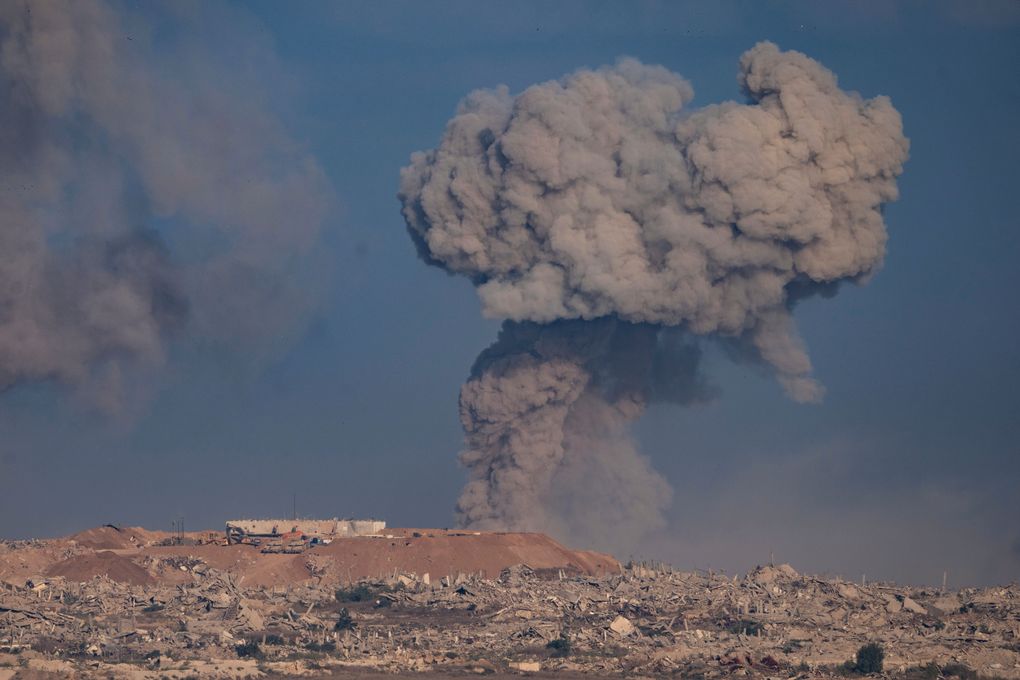
A global association of genocide scholars has recently passed a resolution stating that Israel's military activities in the Gaza Strip align with the legal definition of genocide. The resolution, supported by 86% of the 500-member International Association of Genocide Scholars, asserts that Israel's policies and actions in Gaza meet the legal definition of genocide as outlined in the United Nations Convention for the Prevention and Punishment of the Crime of Genocide. The Israeli foreign ministry has not yet responded to this resolution.
The International Court of Justice (ICJ) is currently handling a case filed by South Africa against Israel under the Genocide Convention, accusing Israel of attempting to eliminate Palestinians in Gaza. This case gained momentum when South Africa submitted a detailed memorial in May, prompting several countries to express support for the proceedings. A coalition of countries, including Ireland, has urged the court to expand its interpretation of genocide to hold states accountable.
Israeli officials have expressed skepticism about international legal institutions, dismissing the proceedings at the ICJ and the International Criminal Court as politically motivated efforts to delegitimize Israel's right to self-defense. Author David Grossman, who lost his son in Lebanon, publicly labeled Israel's actions in Gaza as genocide, while others, like international law scholar Nitsana Darshan-Leitner, argue that the criteria for genocide have not been met.
The debate surrounding Israel's actions in Gaza has sparked differing opinions among experts and commentators. Some, like war studies specialist John Spencer, see no evidence of genocidal intent in Israeli military targeting procedures, viewing the use of the term genocide as political rather than legal. Commentator Sherwin Pomerantz believes that while Israel's actions have had devastating consequences, they do not meet the premeditated intent required for genocide under international law.
The resolution by the genocide scholars' association has elicited strong reactions from both supporters and critics. Supporters believe it highlights the humanitarian impact of the conflict and raises concerns about the campaign's conduct. Critics argue that it misapplies the most serious charge in international law. The ongoing debate surrounding Israel's actions in Gaza has raised concerns about potential implications for antisemitism and the broader Jewish community.
In conclusion, the resolution passed by the genocide scholars' association regarding Israel's actions in Gaza has sparked a contentious debate among experts and commentators. The differing perspectives on whether these actions constitute genocide underscore the complexity and sensitivity of the issue, with implications for international law and humanitarian concerns.