Governor Pritzker Stands Firm Against Trump's Threat to Deploy National Guard in Chicago: A Clash of Perspectives on Crime Intervention
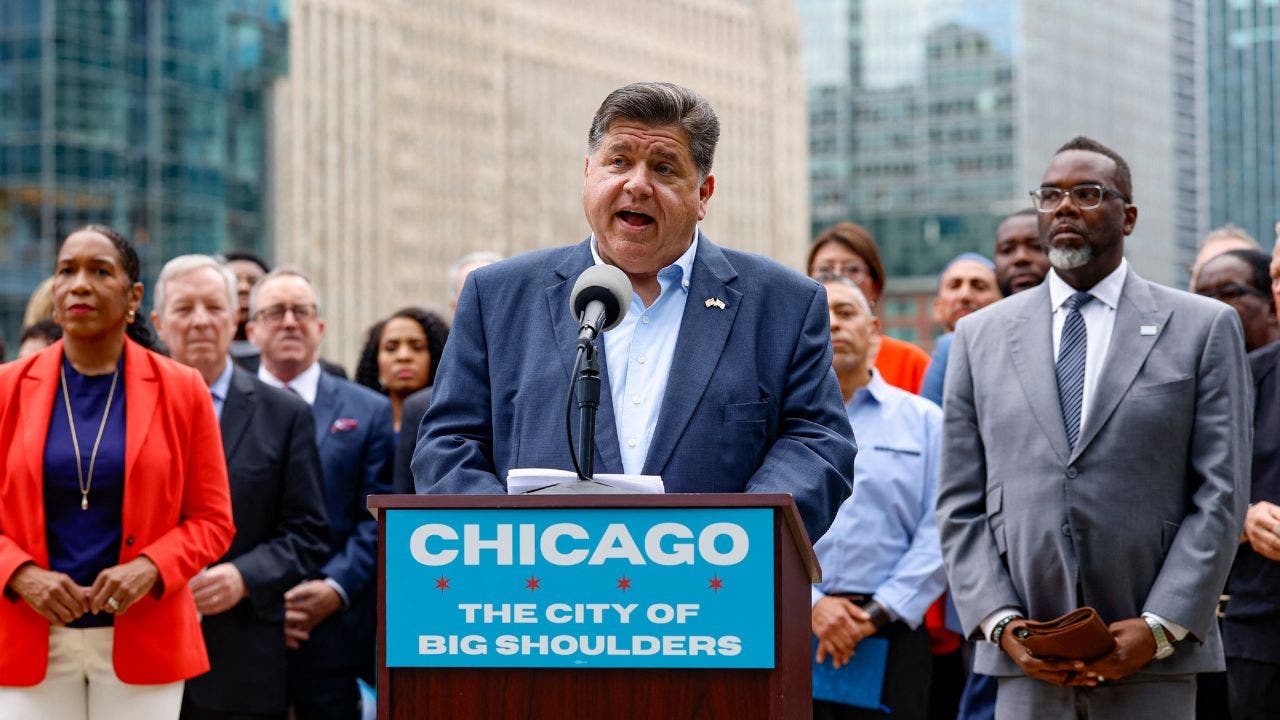
Illinois Governor JB Pritzker has stated that the state will not tolerate President Donald Trump's threat to deploy the National Guard to Chicago in response to the city's crime issues. Pritzker emphasized that action from the federal government will be met with a response.
The governor's remarks are part of an ongoing feud between Pritzker and Trump, as the federal government considers sending troops to Chicago. Pritzker has criticized Trump for attempting to manufacture a crisis and politicize the situation in Chicago.
Pritzker has reiterated that there is no crime emergency in Chicago that warrants federal intervention. He has called the potential deployment of the National Guard unconstitutional and un-American, accusing Trump of using the military to occupy a U.S. city for political gain.
Chicago Mayor Brandon Johnson, also a Democrat, has pointed out that violent crime in the city has decreased over the past year, with homicides, robberies, and shootings showing a decline. However, crime rates are still higher compared to the previous year, according to Chicago police statistics.
Other Illinois leaders have joined Pritzker and Johnson in criticizing the potential deployment of troops to Chicago. Trump, in response, called Pritzker incompetent and Mayor Johnson no better, highlighting the crime issues in Chicago and urging them to seek his help.
Trump's move to increase federal law enforcement presence in Washington, D.C., to address crime issues has drawn attention. The deployment of federal agents and National Guard troops in the capital is part of the federal government's efforts to combat crime in the city.
In conclusion, the tension between the Illinois governor, Chicago mayor, and President Trump regarding the potential deployment of the National Guard to Chicago underscores the differing perspectives on how to address crime in the city. The debate over federal intervention in Chicago's crime situation continues to be a point of contention between state and federal authorities.