Redistricting Showdown: Texas Democrat Stands Firm Against Surveillance Agreement in House Chamber
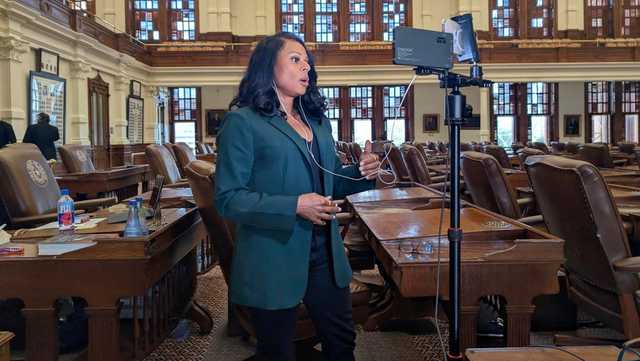
A Texas Democrat chose to remain in the state House chamber overnight rather than agree to be monitored by law enforcement officers as Republicans push to expedite the redrawing of congressional maps favored by former President Donald Trump. The Texas House, controlled by Republicans, planned to vote on the new maps while California Democrats countered by advancing their own U.S. House boundaries for the 2026 midterm elections. Democrats had previously staged a two-week walkout to block a vote on the new maps, prompting the Republican House speaker to require around-the-clock surveillance for those who returned to ensure their presence in the Capitol. State Rep. Nicole Collier opted to stay in the House rather than sign the surveillance agreement to leave the floor.
Lawmakers had officers stationed outside Democrats' Capitol offices, with one even following a representative during her evening commute and accompanying her for various activities. The Democrats criticized the surveillance as a waste of taxpayer money and a performance. Collier, representing a minority-majority district in the Fort Worth area, refused to sign the surveillance agreement, stating that she would not allow Republicans to control her movements and monitor her. The ongoing battle over redistricting in Texas and California has become a focal point in the fight for control of Congress in the upcoming midterm elections.
The standoff between Texas Democrats and Republicans intensified as Democrats returned from their walkout, prompting the Republican House Speaker to promise swift action on the legislative agenda. Despite the Democrats' return, Republicans now have the opportunity to approve redrawn districts, which Democrats plan to challenge in court. The partisan struggle over redistricting has also spread to other states, with Trump pressuring Republican-led states to consider redistricting while Democratic governors signal their intent to follow California's lead. The president's goal is to solidify the Republican majority in the House and avoid a repeat of the 2018 midterms.
In California, Democratic legislators introduced new maps as part of a referendum to override the independent commission's work after the 2020 census. The proposed boundaries aim to expand the Democratic advantage in battleground districts and target specific regions to secure more left-leaning voters. The battle over redistricting in California mirrors the partisan tensions seen in Texas, with both parties gearing up for legal challenges and political maneuvers to influence the outcome. The fight over redistricting in these states underscores the high stakes involved in shaping the political landscape for the next decade.
In conclusion, the ongoing redistricting battles in Texas and California highlight the intense partisan struggle over control of Congress in the upcoming midterm elections. Democrats and Republicans are engaged in a high-stakes showdown over redrawing congressional maps to gain a strategic advantage in key districts. The fight over redistricting has become a focal point in the broader political landscape, with both parties employing legal tactics and political maneuvers to shape the outcome in their favor. As the battle over redistricting continues to unfold, the implications for the balance of power in Congress and the future of American democracy remain at the forefront of the political discourse.