Challenges and Trends: Retail Workers in Soho Navigate Wage Growth Amid Post-Pandemic Inflation
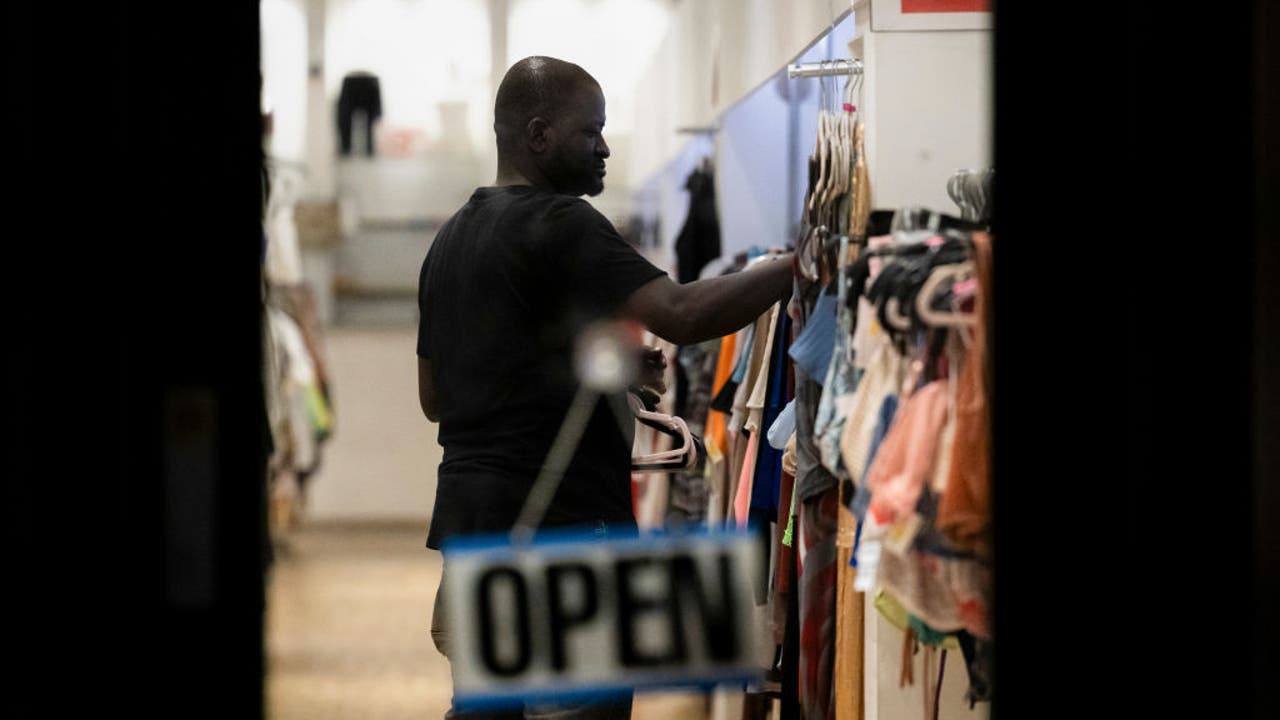
In New York's Soho neighborhood, retail workers are facing challenges as wages struggle to keep up with inflation post-pandemic. The latest report from Bankrate's 2025 Wage to Inflation Index shows that prices have outpaced wage growth by 1.2 percentage points since early 2021. While the gap has narrowed compared to previous years, wages have not fully caught up with the surge in prices.
Inflation has risen by 22.7% since January 2021, slightly higher than the 21.5% increase in wages based on Bureau of Labor Statistics data for Q2 2025. The wage-inflation gap reached its peak at 4.8 percentage points in Q2 2022 and has been gradually decreasing since Q3 2022, according to Bankrate's analysis. However, progress has slowed in the past year as the labor market cools and inflation remains persistent.
Despite the overall trend, some sectors have seen wage growth outpacing pandemic-era price increases. Industries such as retail trade, health care, leisure and hospitality, and food services have experienced higher wage growth compared to inflation. On the other hand, sectors like education, construction, financial activities, professional services, and manufacturing have lagged behind in wage growth.
Bankrate's Economic Analyst Sarah Foster highlighted that while economists view the U.S. economy as resilient, many Americans feel differently. A significant portion of Americans believe the economy is on the wrong track, possibly due to wages not fully recovering from post-pandemic inflation. Foster also noted that faster wage growth could indicate some industries still have bargaining power, but the current labor market dynamics make it challenging for workers to seek change.
Looking ahead, Bankrate projects that the wage-inflation gap could potentially close by Q3 2026 if current trends persist. Despite the challenges faced by retail workers and other sectors, there is hope for improvement in the future as the economy continues to evolve.