Title: The AI Chip Conundrum: Trump's Decision, China's Response, and the Semiconductor Race
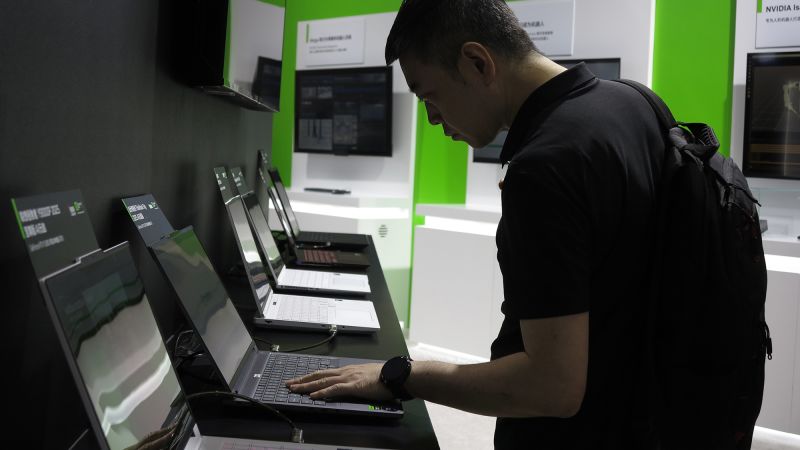
In a surprising turn of events, President Donald Trump recently allowed Nvidia to resume sales of a key AI chip designed for the Chinese market, despite years of technology restrictions on China. However, Beijing's response has been lukewarm, as they view the chip as a security risk and are focused on building a self-sufficient semiconductor supply chain. China's semiconductor industry has made significant strides, but it still relies on American chips and technology, especially for advanced AI processors that are still blocked under US export controls.
The policy reversal reflects China's push for a wholly homegrown chip supply chain to ensure a secure chip supply. Despite China's progress in the semiconductor sector, the US remains the leader in the high-stakes AI race. The chip in question, Nvidia's H20, was released to maintain access to the Chinese market following strict export controls. Trump's decision to allow sales of the chip to China has raised questions about his transactional approach to national security.
China has raised concerns about the security risks of Nvidia's H20 chips, such as tracking and positioning features, which some US lawmakers have also flagged. Chinese authorities have urged companies to avoid using H20 chips, citing security concerns. Despite these concerns and the chip's reduced performance, Chinese companies are still interested in the H20 chips, as they are highly sought after in the market.
One of the key appeals of the H20 for Chinese companies is Nvidia's well-established ecosystem and Huawei's limited production capacity. Chinese companies face supply bottlenecks in scaling up production of AI chips due to constraints in manufacturing and advanced packaging technology. While China's progress in semiconductor technology should not be underestimated, the country still faces challenges in achieving self-sufficiency in chip production.
Experts believe that China's rapid progress in semiconductor technology has been accelerated by years of tightening export controls. The percentage of homemade AI chips in China is projected to increase significantly in the coming years, while American suppliers like Nvidia and AMD are expected to shrink. Despite the challenges, China is making strides in developing its semiconductor industry and reducing its reliance on foreign technology.
In conclusion, the recent policy reversal allowing Nvidia to resume sales of AI chips to China has sparked debate about national security and technology competition between the US and China. While China is making progress in developing its semiconductor industry, it still faces challenges in achieving self-sufficiency in chip production. The dynamics of the AI race and the evolving semiconductor landscape will continue to shape the relationship between the US and China in the technology sector.