California Democrats Push Partisan Redistricting Plan Amid Trump's Call for GOP Map Changes
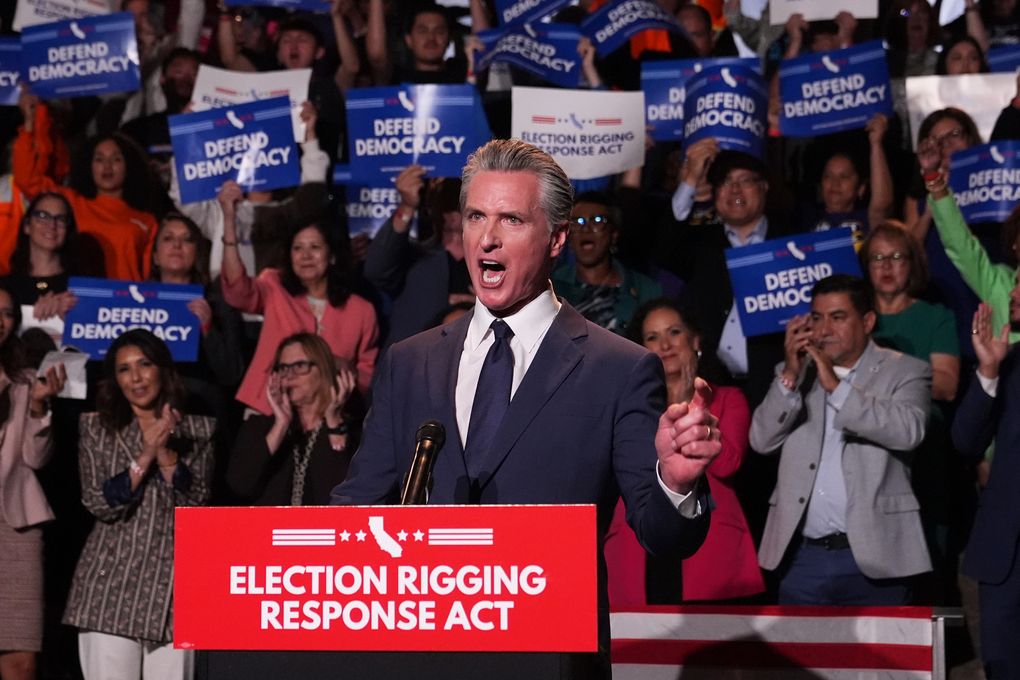
California is entering the redistricting fray, becoming the first Democratic-led state to do so in response to President Trump's call for Texas Republicans to redraw maps to maintain their U.S. House majority. Lawmakers in California are set to return from summer break and will introduce a partisan plan to add five seats for their party. The Democrats hold supermajorities in both chambers, allowing them to advance the maps without Republican votes.
The legislative process in California will involve hearings on Tuesday and Wednesday to establish the new congressional map, declare a special election on Nov. 4, and authorize reimbursement for local government costs. The proposed map will be open for public feedback, but changes are unlikely once the bills are introduced. Any amendments would require a 72-hour wait before a vote, potentially delaying the approval process.
Elections officials are under pressure to prepare for the November election, as California sends mail-in ballots to every voter a month before each election. Counties are urging the Legislature to provide funding in advance, as the cost of the special election is estimated to be over $200 million. Governor Newsom is leading the campaign in support of the maps, framing the effort as a referendum on Trump and the future of American democracy.
Former Governor Arnold Schwarzenegger and Republican donor Charles Munger Jr. are expected to oppose the partisan redistricting effort, advocating for nonpartisan redistricting. State Republicans view the move as a power grab by Democrats and have threatened legal action. Common Cause, a good governance group, initially opposed the effort but has since reversed its stance, stating they won't challenge partisan redistricting if approved by voters.
California voters granted redistricting power to an independent commission in 2010 to reduce partisanship in the process. Governor Newsom and Democratic leaders plan to seek approval for their new maps for a limited number of elections before returning map-drawing power to the commission after the 2030 census. The new map would only take effect if a Republican-led state proceeds with new maps.