Trump's Authoritarian Show of Force in D.C.: A Symbolic Gesture or Substantive Solution?
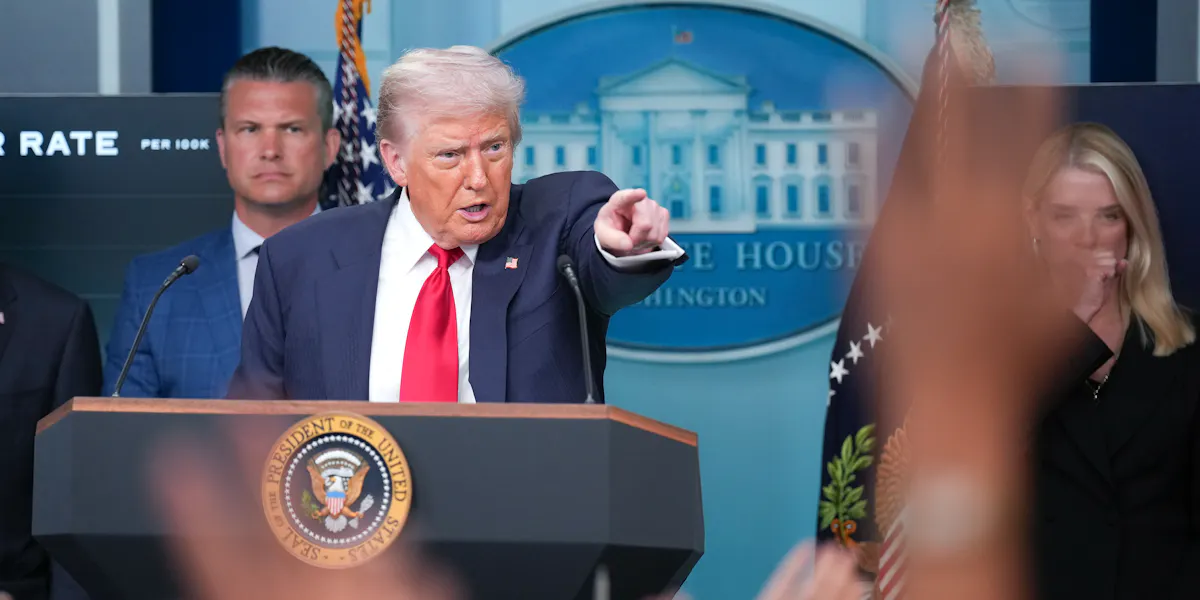
President Donald Trump has taken control of the District of Columbia’s police force and deployed federal agents and National Guard soldiers to the capital's streets. The move was described as an authoritarian show of force to combat crime and homelessness in the city. Trump referred to the day as "Liberation Day," despite facing challenges on other policy fronts, such as slowing hiring rates and resistance to releasing the Epstein files.
The deployment of federal agents and National Guard soldiers in D.C. appears to be more of a performative gesture than a substantive solution to crime. The presence of Drug Enforcement Agency agents in full gear patrolling the National Mall raises questions about the true purpose of the operation. The move is seen as a show of armed force, potentially aimed at creating fear and generating media coverage for the administration.
The decision to take over the city's police force was prompted by a recent assault on a former DOGE staffer near Dupont Circle. While D.C. experienced a surge in violent crime in 2023, recent statistics show a decline in homicides, robberies, and carjackings. Despite positive trends, the White House has used isolated incidents to justify the need for federal intervention in the city.
President Trump's threat to "federalize" D.C. is legally questionable, as the District of Columbia is under Congress's control. The Home Rule Act allows the president to commandeer the Metropolitan Police Department under certain emergency conditions. While Trump has unique powers within D.C., the civilian government remains intact, and local officials have criticized his actions as unnecessary and unlawful.
Mayor Muriel Bowser expressed concern over Trump's intervention in D.C., describing it as unsettling and unprecedented. She emphasized the city's progress in reducing crime, suggesting that federal intervention was unwarranted. Despite actual improvements in public safety, Trump's portrayal of D.C. as plagued by crime and decay serves a political narrative that aligns with his supporters' views on urban areas and Democratic leadership.
Trump's rhetoric on allowing police officers to act without restraint during the federal control period raises concerns about potential abuses of power. The president's remarks suggest a willingness to use force against citizens, highlighting the authoritarian undertones of the administration's actions. The focus on creating a spectacle of law enforcement presence in D.C. reflects a broader narrative of fear and disorder perpetuated by conservative media outlets.
In conclusion, President Trump's decision to deploy federal agents and National Guard soldiers in D.C. and take control of the city's police force raises questions about the true motives behind the move. While citing concerns about crime and homelessness, the administration's actions appear more symbolic than effective in addressing public safety issues. The clash between federal intervention and local governance underscores the challenges of maintaining democratic principles in the face of authoritarian tendencies.