Global Markets React to New Tariffs: Asian Stocks Decline, U.S. Futures Outlook Negative
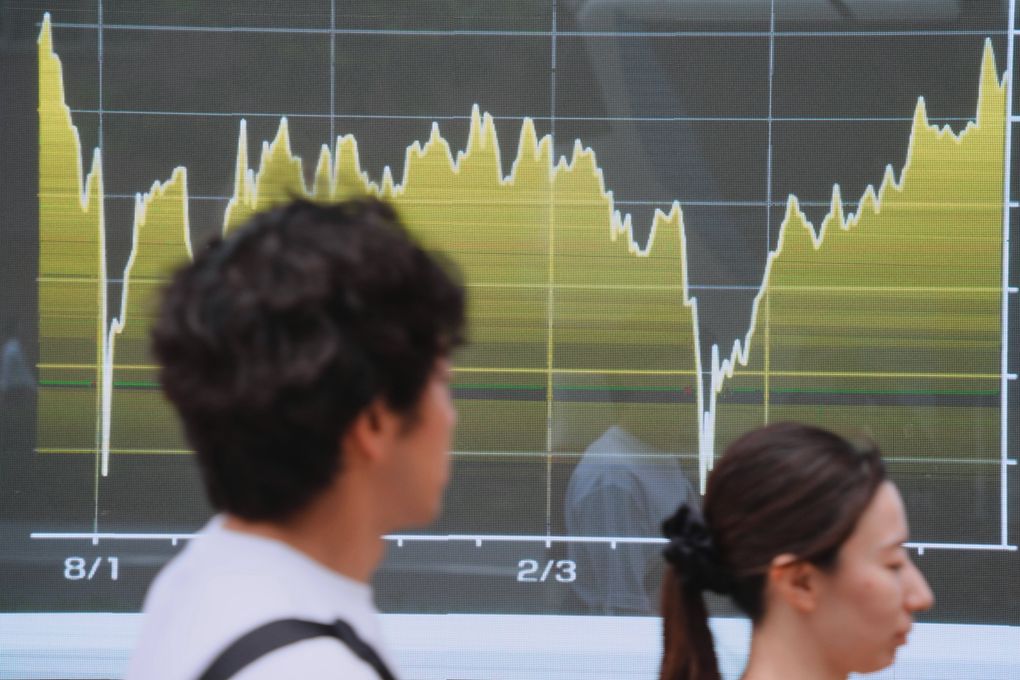
Asian markets experienced a decline on Friday following President Donald Trump's announcement of new tariffs on 68 countries and the European Union. The uncertainty surrounding the tariff deadline has impacted global markets, with Japan's Nikkei 225 and South Korea's Kospi both seeing losses. Hong Kong's Hang Seng index and Shanghai Composite also dipped, while Australia's S&P ASX 200 and India's BSE Sensex had mixed performances.
The imposition of new tariffs by the U.S. has led to a negative outlook for U.S. and European equity futures, causing Asian stocks to suffer. The move has been described as "imperial trade" by market strategists, with the U.S. focusing on high-value industries for its own benefit. Despite the challenges, some regions in Asia, particularly Southeast Asia, may benefit from tariff differentials.
On Wall Street, stocks closed lower on Thursday as a tech rally faded and the health care sector pulled back. The S&P 500 and Dow Jones Industrial Average both saw declines, with health care companies contributing to the market's losses. However, gains by big tech companies like Meta Platforms and Microsoft helped offset some of the market's decline.
In other news, U.S. benchmark crude oil prices rose slightly, while the U.S. dollar weakened against the Japanese yen and the euro. The global market remains cautious amid ongoing trade tensions and economic uncertainties.