Assessing the Impact of President Trump's Tariffs on Federal Budget Deficits: A Cautionary Tale
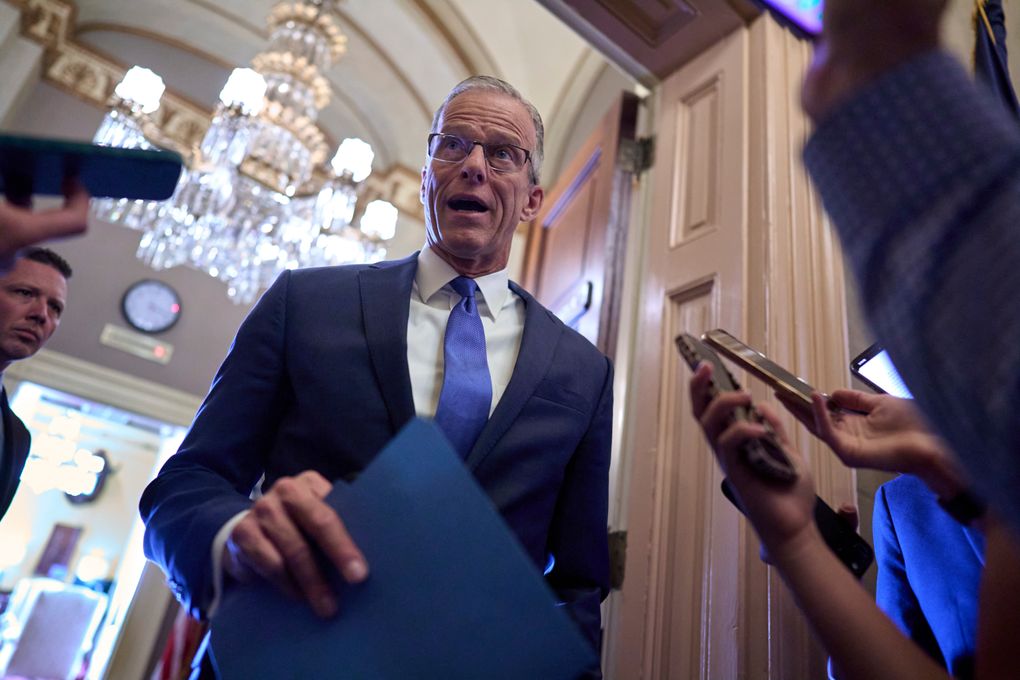
President Donald Trump's proposed tax cuts under the One Big Beautiful Bill Act could potentially lead to a significant increase in federal budget deficits, according to the Congressional Budget Office. The tax cuts are projected to drain government funds faster than spending cuts would save money. To counteract this impact, Trump has introduced sweeping import taxes, or tariffs, which are expected to generate revenue for the Treasury and offset the budget impact of the tax-cut bill, potentially reducing deficits by $2.5 trillion over the next decade.
While the budget math may suggest a balanced approach, experts caution against relying heavily on tariffs to finance the government. Economists and budget analysts express concerns about the instability of tariffs as a revenue source, as they could be reversed by future administrations or challenged in court. Additionally, tariffs are viewed as detrimental to the economy, as they increase costs for U.S. manufacturers, invite retaliatory measures from foreign countries, and discourage foreign investment in the U.S. economy.
The implementation of tariffs could have far-reaching consequences, including reduced economic growth, higher borrowing costs, and negative impacts on low- and middle-income households. The One Big Beautiful Bill already includes cuts to federal food programs and Medicaid, which would disproportionately affect the poorest Americans. Layering regressive tax increases like tariffs on top of these cuts could further exacerbate the financial burden on low- and middle-income households.
In conclusion, while tariffs may offer a short-term solution to offset budget deficits, they are considered an unreliable and inefficient source of revenue. The potential economic harm caused by tariffs outweighs the benefits of using them to finance the government. Experts emphasize the need for a more sustainable and effective approach to revenue generation that does not rely heavily on tariffs.