Operation Nanook-Nunalivut: Securing the Arctic Future Through Military Cooperation
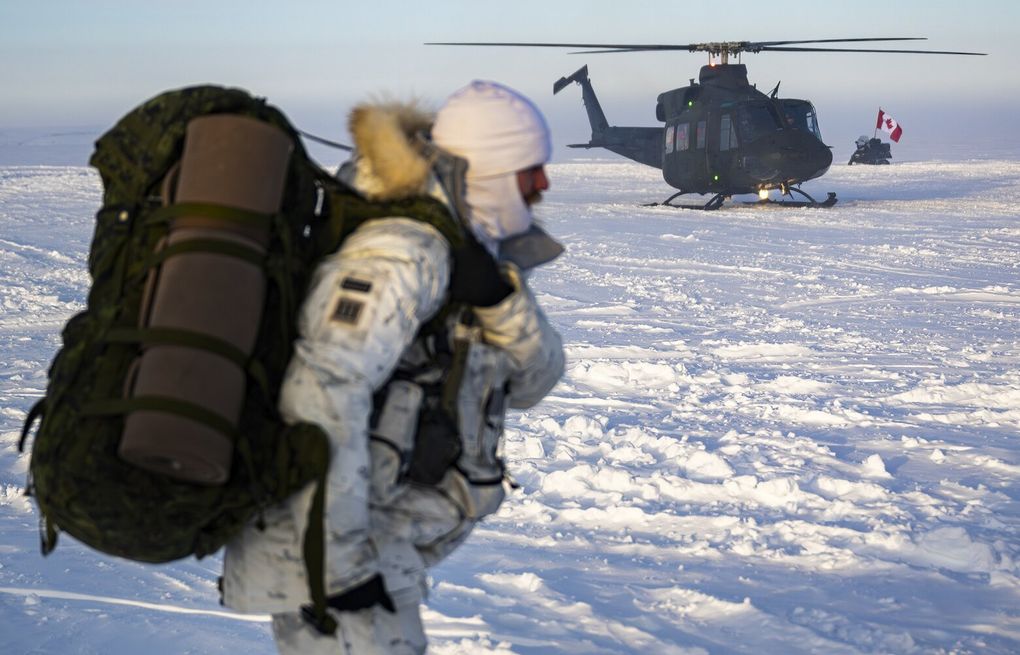
Soldiers from the Canadian and American militaries, along with units from other NATO allies, recently conducted a training exercise in the harsh Arctic environment of Canada’s Northwest Territories. The exercise, known as Operation Nanook-Nunalivut, involved patrolling the frozen Arctic Ocean and surrounding areas near the Mackenzie River Delta. This region, facing challenges from global instability, climate change, and potential international competition, is becoming increasingly important as the sea ice thins and the Northwest Passage opens up for longer periods.
As the Arctic region warms, Canada asserts its sovereignty over the Northwest Passage, a key route connecting the Pacific and Atlantic Oceans. However, the country recognizes the need for collaboration with the United States and other allies to ensure security in the region. NATO, in particular, aims to deter Russian ambitions in the Arctic, emphasizing joint efforts and cooperation among military forces.
The extreme conditions of the Arctic present unique challenges for soldiers, with freezing temperatures, equipment malfunctions, and limited resources. The participants in the training exercise, many of whom had little prior experience in such environments, were accompanied by Canadian Rangers, who provided valuable knowledge of the land, culture, and climate. These Rangers, drawn from Indigenous and non-Indigenous communities, play crucial roles as guides and advisers in Arctic operations.
While Canada and the United States have historically been close allies, recent tensions over trade tariffs and political rhetoric have strained their relationship. In response, Canada is focusing on demonstrating its commitment to Arctic security and cooperation with the U.S., while also addressing potential threats from countries like Russia. Both nations have updated their Arctic strategies to reflect the region's growing significance amid climate change and geopolitical shifts.
Canada's unwavering stance on Arctic sovereignty is evident in its military exercise, symbolized by the Inuktitut phrase "This land is ours." The Arctic's future is shaped by a complex interplay of environmental changes, economic interests, and geopolitical dynamics, highlighting the need for continued collaboration and strategic planning among Arctic nations.