Unveiling the Secrets of Hail: Inside Project ICECHIP's Daring Storm Chasing Expedition
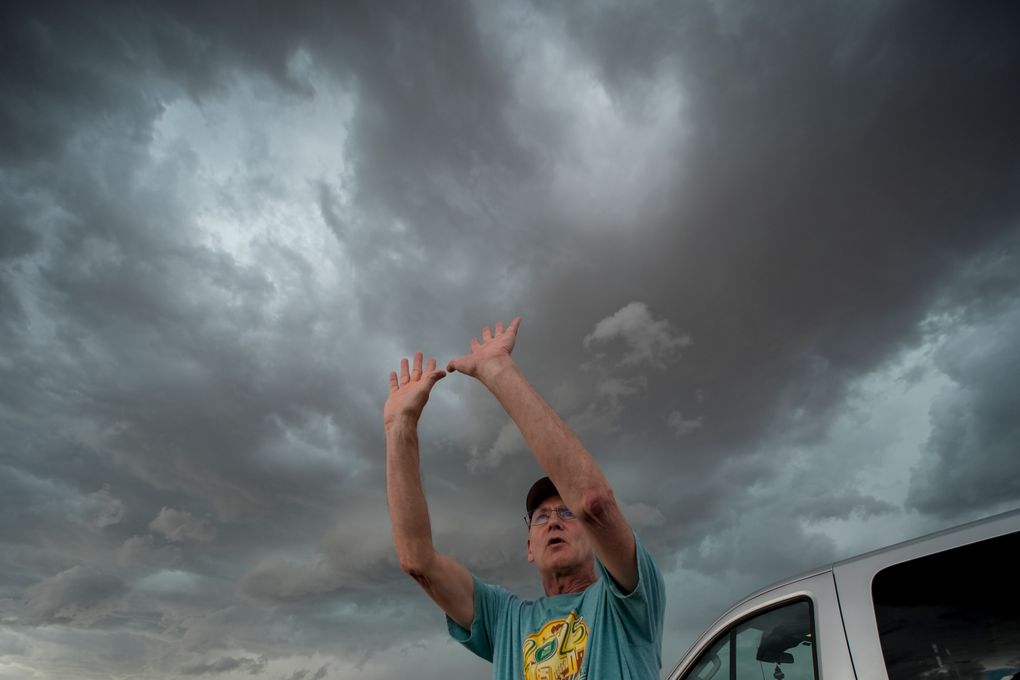
A team of scientists is conducting a study on hail, one of the nation's costliest weather dangers, as severe storms continue to wreak havoc across the midsection of the United States. With hail causing billions of dollars in damage annually, the researchers are venturing into the heart of storms to observe how hail forms and its impact on roofs, cars, and crops. Project ICECHIP, funded by the National Science Foundation, involves driving into the storms to collect and analyze hail samples of various sizes and shapes.
Equipped with specially designed vehicles and protective mesh for windshields, the scientists are braving the intense hail pelting in the storm's core known as the "shaft." This unique approach to studying hail involves driving directly into the storms, providing valuable insights into the formation and characteristics of hail. The team, accompanied by journalists, is traveling across the Great Plains, deploying radar trucks, weather balloons, drones, lasers, and cameras to gather data on hail and its impact.
During their expeditions in Kansas, Oklahoma, and Texas, the researchers have encountered hail measuring over 5 inches in diameter, showcasing the destructive power of these icy projectiles. The team's vehicles and equipment bear the marks of hail impacts, serving as tangible evidence of their daring research efforts. By collecting pristine hail samples before they reach the ground, the scientists aim to better understand the mechanisms behind hail formation and its potential for damage.
Retired National Weather Service forecaster David Imy highlighted potential storm hot spots in Texas, Oklahoma, and New Mexico, guiding the team's pursuit of severe weather events. With computer models predicting significant storms in the region, the researchers are prepared to intercept hail-producing systems and gather valuable data on hail characteristics. The study aims to shed light on the increasing frequency of large hailstones due to climate change, emphasizing the need for proactive research on this destructive weather phenomenon.
Hail damage poses a significant threat to lives and property, making it a priority for scientific investigation. The research mission, supported by the insurance industry and the National Science Foundation, seeks to unravel the mysteries of hail formation and its implications for future weather patterns. As climate change continues to influence weather systems, the study of hail becomes increasingly relevant in understanding the evolving risks associated with severe storms.
In conclusion, the ongoing research on hail by a team of dedicated scientists represents a crucial effort to enhance our understanding of this destructive weather phenomenon. By venturing into the heart of storms and collecting valuable data on hail formation, the researchers aim to mitigate the impact of hail damage on lives, property, and crops. As climate change accelerates the frequency of severe weather events, the study of hail becomes imperative in preparing for future challenges posed by extreme weather conditions.