Preserving the Legacy: The Hidden Christians of Nagasaki's Ikitsuki Island
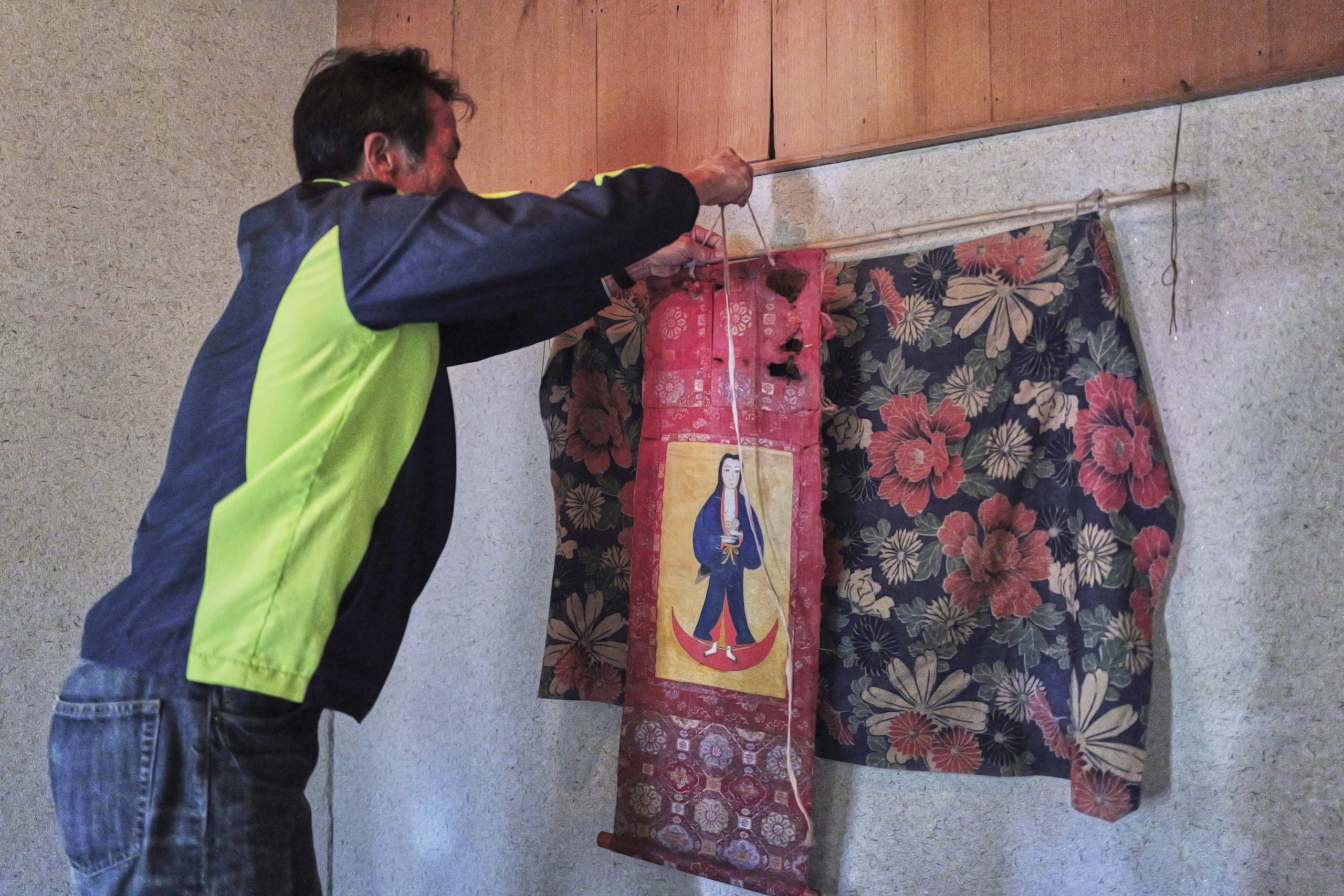
In a remote area of Nagasaki, Japan, a group of Hidden Christians gathers to worship in a small room dedicated to what they call the Closet God. The room contains unique icons and objects of worship that have been passed down through generations, symbolizing their clandestine faith during times of persecution. These Hidden Christians have preserved a version of Christianity that differs from mainstream Catholicism, maintaining traditions and rituals that date back to the days of samurai and shoguns.
The Hidden Christians on Ikitsuki Island and other parts of Nagasaki still practice their unique form of Christianity, praying to disguised objects and chanting in Latin, a language not widely used anymore. As the older generation of Hidden Christians ages and the younger generation moves away or loses interest in the faith, there is a growing concern that this distinct version of Christianity will disappear with them. The Hidden Christians are determined to preserve their traditions and convey the significance of their faith to the world before it is lost forever.
The history of Hidden Christianity in Japan dates back to the 16th century when Jesuit priests successfully converted many warlords and peasants to Christianity. However, the shoguns later viewed Christianity as a threat, leading to a brutal crackdown and the persecution of believers. Despite the ban being lifted in the late 19th century, some Hidden Christians chose to continue practicing their underground faith, maintaining their rituals and beliefs that have been passed down through generations.
The Hidden Christians have a deep communal bond rooted in their shared history of persecution and resilience. They continue to perform rituals and ceremonies that have remained unchanged since the 16th century, preserving their unique form of Christianity. As the population of Hidden Christians dwindles and modernization impacts rural communities, there are concerns about the future of this ancient tradition. Efforts are being made to document and preserve the artifacts and practices of Hidden Christianity before it fades into obscurity.
The Hidden Christians face challenges in passing down their traditions to future generations as societal changes and declining populations affect their communities. Despite the obstacles, members like Masatsugu Tanimoto and Masashi Funabara are determined to keep the faith alive within their families and communities. While the extinction of Hidden Christianity may be inevitable, these individuals hope to maintain their traditions and preserve their heritage for as long as possible, ensuring that the legacy of the Hidden Christians lives on.