Navigating Layoffs: Understanding the Economic Landscape in 2025
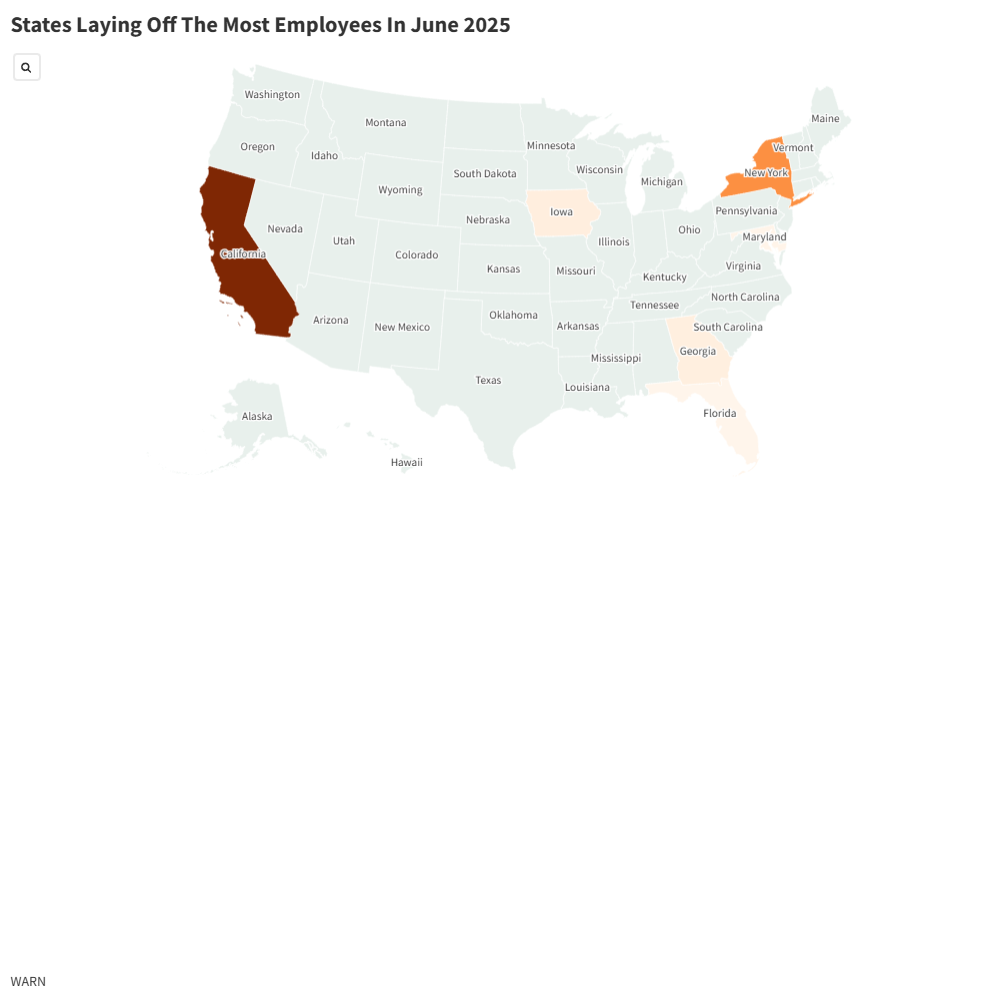
Numerous employers are planning to lay off a significant number of workers in June, with some states experiencing more job cuts than others. The uncertainty surrounding the U.S. economy, partly due to tariffs imposed by the Trump administration on China and industries like aluminum and steel, has led many American businesses to reassess their future expenses and consumer sentiment. California leads the way with the highest number of layoffs planned for this year, totaling 29,400 as of June 3, according to Worker Adjustment and Retraining Notification Act (WARN) notices.
Following California, other states with notable layoffs in 2025 include Texas, Florida, Georgia, Maryland, Illinois, and New Jersey. The layoffs are spread across various industries and company sizes, reflecting the broader economic concerns facing the nation. The uncertainty in the economy has made businesses hesitant to invest in new hires or equipment, with potential layoffs looming if the downturn persists.
The upcoming job numbers from the Bureau of Labor Statistics will provide further insights into the current employment landscape. Recent declines in federal workers and scientific professionals, as well as retail employment, indicate potential challenges ahead. Despite the resilience shown by the U.S. economy in recent years, the impact of tariffs and economic uncertainties remains a significant concern for businesses and workers alike.
Layoffs are a natural part of a dynamic economy, according to experts like John Tamny, who emphasize the importance of allowing for talent reallocation and market adjustments. The recent increase in tariffs on imported steel and aluminum by President Trump aims to protect national security but may have unintended consequences on domestic industries and employment. The evolving economic landscape underscores the need for businesses to adapt to changing market conditions and regulatory environments.