"National Concealed Carry Reciprocity: The Debate Over Permitless Carry Across States"
Read "National Concealed Carry Reciprocity: The Debate Over Permitless Carry Across States" on WALY Radio
"National Concealed Carry Reciprocity: The Debate Over Permitless Carry Across States"
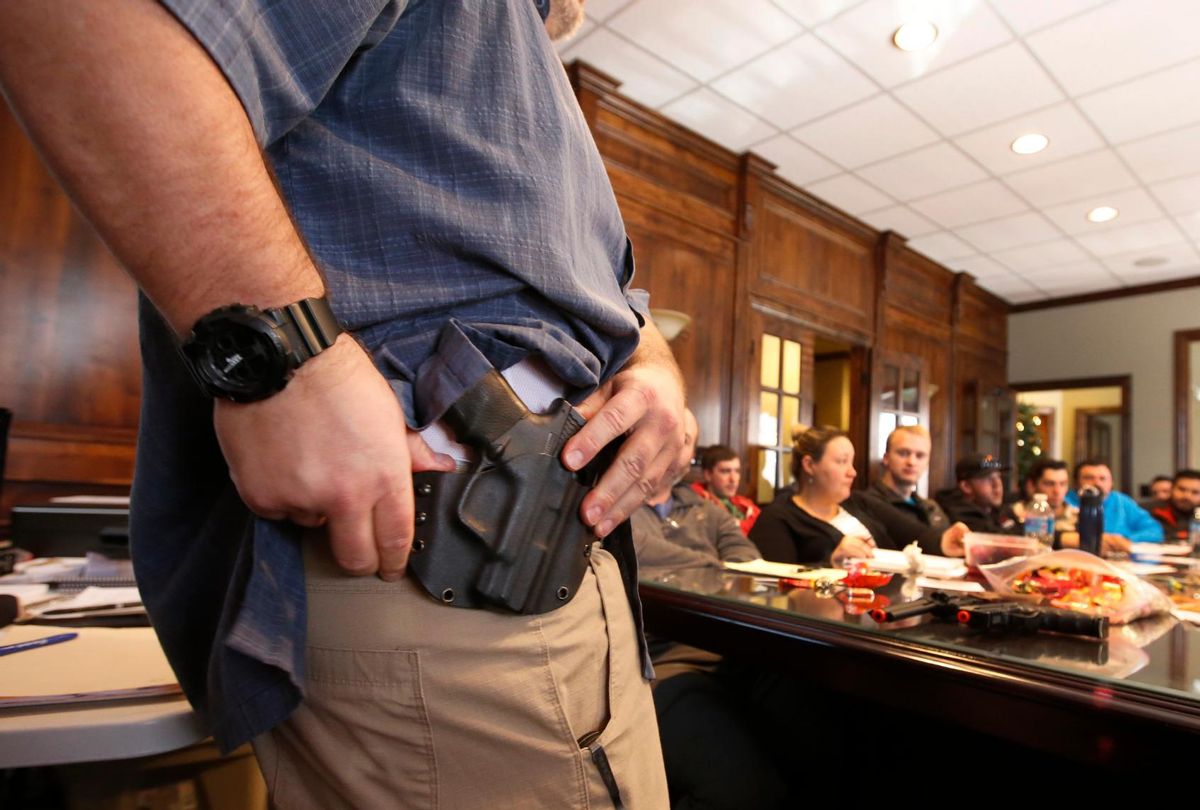 [!CDATA[In the upcoming 2024 election, pro-gun advocates are rallying behind a key demand for President Donald Trump's second term: a significant relaxation of concealed carry regulations across the country. The primary focus is on national concealed carry reciprocity, which would require states to recognize concealed carry permits from other states, allowing permit holders from states with more lenient regulations to carry weapons in states with stricter rules. This policy has gained traction among Republican leaders in both the House and the Senate, with strong support from figures like Rep. Richard Hudson and Speaker Mike Johnson. The proposed legislation would treat concealed carry permits similar to driver's licenses, enabling permit holders to carry in any state. For residents of permitless carry states like Texas, proving residency in such states would suffice for carrying a firearm. The current Congress is seen as an opportune moment for gun lobbyists to push this policy through, with Speaker Johnson aiming to bring the bill to a floor vote soon. The bill has garnered significant support, including from a Democrat, Rep. Jared Golden, indicating bipartisan interest in the issue. Despite past efforts facing hurdles in the Senate, the current push for concealed carry reciprocity is met with challenges due to the changing landscape of Senate Democrats. The need for additional Democratic support poses a significant obstacle for Republicans looking to pass the bill. While gun-related legislation has been attached to budget reconciliation bills in the past, the current bill lacks a permitless carry provision. The potential violation of the Senate's Byrd Rule further complicates the path to passing national concealed carry reciprocity. Critics of the policy, including advocates for gun control like Everytown for Gun Safety, raise concerns about the dangers posed by allowing permitless carry across states. The lack of uniform regulations and background checks could lead to adverse outcomes, particularly for survivors of domestic abuse. Opposition to the policy also stems from law enforcement agencies and concerns about public safety. Despite promises from Republicans to advance the legislation, the issue remains contentious, with public safety considerations often taking precedence in Congress. An analysis of states that removed licensing requirements for concealed carry revealed a correlation with an increase in firearm-related assaults. Additionally, public opinion on allowing concealed carry without a permit remains low, indicating a lack of widespread support for the policy. Critics argue that loosening regulations on concealed carry could exacerbate existing threats and potentially endanger democratic institutions. The debate surrounding national concealed carry reciprocity continues to highlight the complex interplay between gun rights, public safety, and regulatory oversight.]]