"Enhanced THAAD Radar Bolsters U.S. Missile Defense Against Hypersonic Threats"
Read "Enhanced THAAD Radar Bolsters U.S. Missile Defense Against Hypersonic Threats" on WALY Radio
"Enhanced THAAD Radar Bolsters U.S. Missile Defense Against Hypersonic Threats"
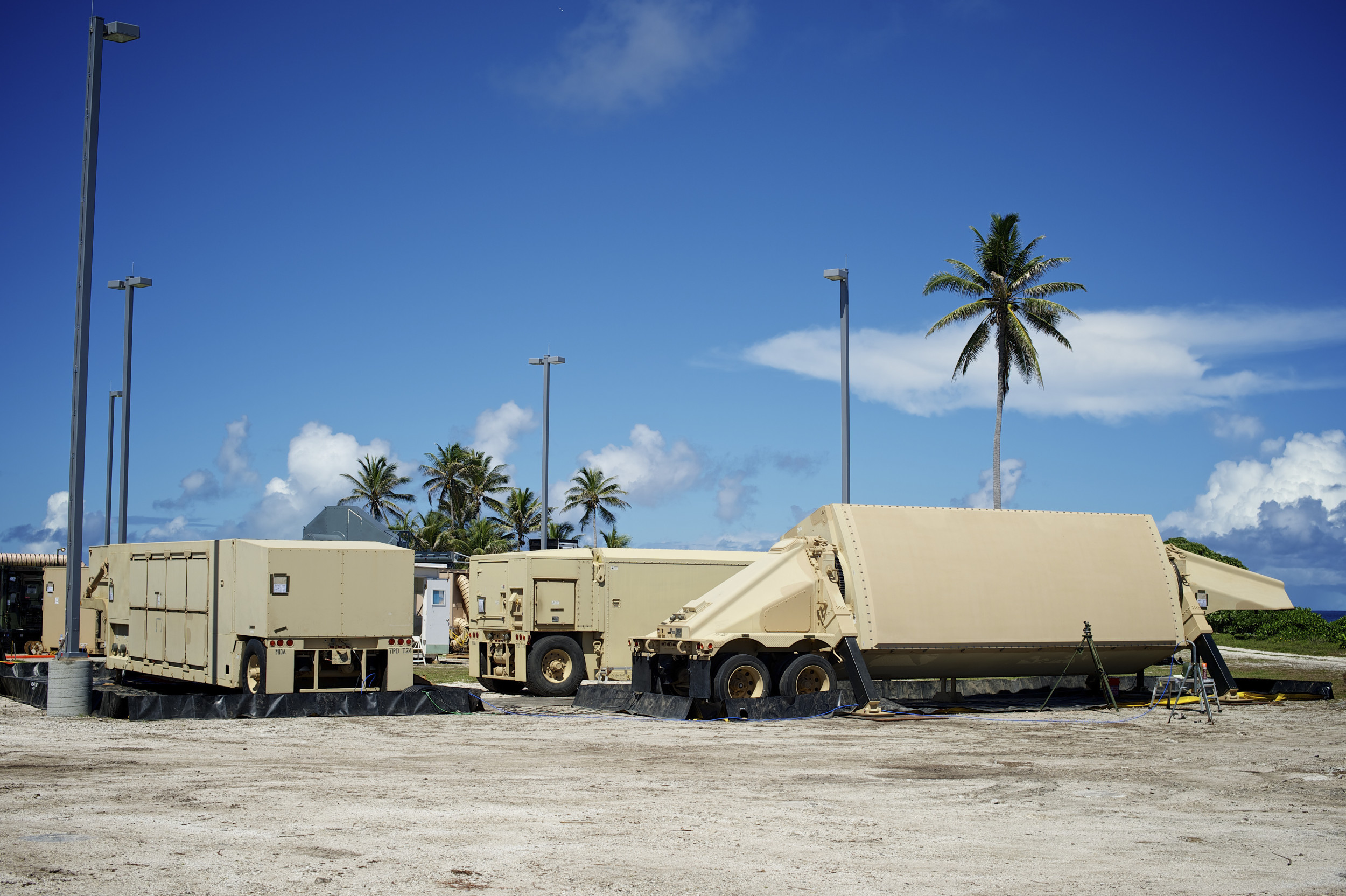 [!CDATA[The United States military has recently received an upgraded Terminal High Altitude Area Defense (THAAD) radar that has the capability to track hypersonic missiles. A hypersonic weapon is defined as one that can travel at speeds of Mach 5 or faster, making it challenging to intercept due to its ability to maneuver during flight. Both China and Russia have hypersonic weapons in service, while North Korea and Iran claim to have developed similar systems. The U.S. conducted a missile defense test in March by firing a simulated interceptor at a hypersonic target over the Pacific. The delivery of the enhanced THAAD AN/TPY-2 radar to the U.S. Missile Defense Agency aligns with Washington's efforts to develop an American version of Israel's Iron Dome air defense system to counter current and future aerial threats. Raytheon, the U.S. defense contractor responsible for manufacturing the radar, announced the delivery, highlighting its ability to detect, track, and discriminate ballistic missiles in various flight phases to protect the U.S. and its allies. This latest radar, the 13th of its kind provided to the U.S. Missile Defense Agency, features a complete Gallium Nitride populated array that enhances sensitivity, increases range, expands surveillance capacity, and supports hypersonic defense missions. The radar's improved capabilities allow for earlier detection of targets, enabling timely decisions on the type of interceptor needed for successful target destruction. The radar can be used in conjunction with various missile defense systems, including THAAD, Standard Missile, and Patriot. The upgraded radar boasts a longer detection range, enabling it to detect small targets and intercept them before they start maneuvering. It can also differentiate between threatening and non-threatening objects, such as separation debris, providing clearer target tracking. The U.S. Missile Defense Agency reports that two foreign countries, the United Arab Emirates and Saudi Arabia, have procured the THAAD system, with the United Arab Emirates successfully conducting the first combat intercept using THAAD in 2022. Raytheon's president of Air and Space Defense Systems, Sam Deneke, emphasized the radar's advanced capabilities and cost-effectiveness, stating that it is prepared to meet the increasing demand for missile defense of the homeland. The U.S. Missile Defense Agency describes the THAAD element as a globally-transportable and rapidly-deployable system capable of intercepting and destroying ballistic missiles during their terminal phase of flight, both inside and outside the atmosphere. While previous versions of the AN/TPY-2 radar have been deployed in various overseas locations, including Turkey, Israel, Japan, South Korea, and Guam, it remains to be seen whether the enhanced radar will be stationed at additional international sites. The continuous advancements in missile defense technology underscore the ongoing efforts to enhance the U.S. military's capabilities in countering evolving threats.]]